Partition appraisal Pennsylvania. Two people can share ownership of a property while holding completely different plans for its future.
One owner may want to sell the property. The other may want to keep it. One may view the home as a long-term investment, while the other needs to access their share of the equity. They may also disagree about renovations, repair costs, rental income, mortgage payments, or the property’s current market value.
When negotiation fails, a co-owner may consider a partition action.
A partition action asks a court to address jointly owned real estate when the owners cannot reach a voluntary agreement. The court may examine ownership rights, whether the property can support a physical division, whether one owner can acquire the other’s interest, or whether a sale provides the most practical outcome.
Regardless of the final result, the parties usually need to answer one central question:
What is the property worth?
An independent appraisal provides market evidence that can help co-owners, attorneys, mediators, and courts evaluate that question.
Property owners and attorneys can learn more about our Pennsylvania partition and legal appraisal services.
What Is a Partition Action?
A partition action involves real estate that two or more people own together.
Common ownership situations include:
- Unmarried partners who purchased a home together
- Siblings who inherited a family property
- Friends who bought a house or investment property
- Former business partners
- Extended family members who share inherited land
- Investors with different financial goals
- Former spouses who still own real estate together
- Beneficiaries who received undivided interests from an estate
A co-owner may seek partition when the parties cannot agree about selling, retaining, dividing, or managing the property.
Pennsylvania follows specific civil procedure rules for partition cases. These proceedings can involve more than one stage and may require the court to address the right to partition before moving to questions about division, sale, accounting, or distribution.
A real estate appraiser does not decide whether a party has a legal right to partition. An attorney should explain the available claims, procedures, and remedies.
The appraiser focuses on real estate value.
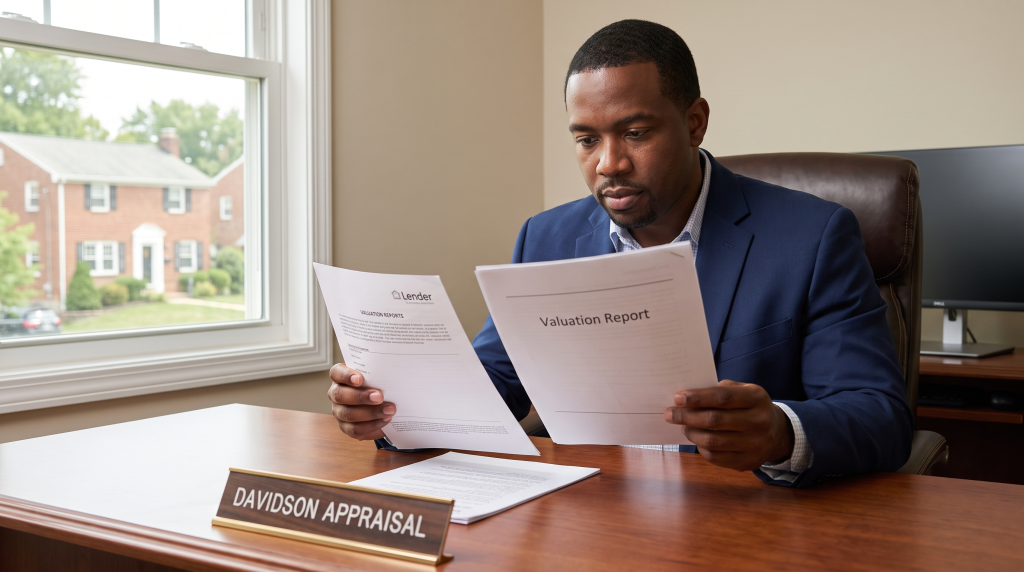
Why Co-Owners Often Disagree About Value
Property owners rarely approach a dispute from the same perspective.
One owner may select the highest sale in the neighborhood. Another may focus on the house’s repair needs. One may rely on an online estimate, while another may use the county assessment or a real estate agent’s suggested listing price.
Emotional attachment can also influence expectations.
A sibling may view an inherited home as an important family asset. Another sibling may see an aging property that requires maintenance, insurance, taxes, and management.
Neither viewpoint establishes market value.
A professional appraisal analyzes the property through market evidence rather than personal preference. The appraiser studies the real estate, relevant comparable transactions, property condition, location, and market conditions.
What Does the Appraiser Need to Value?
Before starting the assignment, the appraiser must understand the exact valuation question.
A partition matter may require an opinion concerning:
- The current market value of the entire property
- The value as of an earlier date
- The value of the property before renovations
- The value of the property in its current condition
- The value of proposed separate parcels
- The effect of a possible subdivision
- The market value of a partial ownership interest
- The property’s potential rental value
- The impact of physical defects or deferred maintenance
These assignments do not answer the same question.
For example, the value of the entire house differs from the value of one undivided ownership interest. Likewise, the current value may differ from the value on the date when the owners separated, inherited the property, or entered an agreement.
The attorney should define the relevant ownership interest, effective date, and intended use before the appraisal begins.
How an Independent Appraisal Helps
An appraisal can give both parties a common set of market facts.
The report may help the owners:
- Negotiate a voluntary settlement
- Consider a buyout
- Evaluate a listing strategy
- Compare a private offer with market evidence
- Prepare for mediation
- Support attorney negotiations
- Present valuation evidence in court
- Analyze whether physical division makes economic sense
- Document the property’s condition
- Reduce arguments based only on online estimates
The appraisal does not force either owner to accept a settlement. It provides a supportable opinion that can make negotiations more productive.
Common Partition Outcomes and the Appraisal’s Role
| Possible outcome | How the appraisal may help |
| One owner buys the other’s interest | Establishes the market value of the property or specified ownership interest |
| Owners agree to sell | Helps them evaluate offers and discuss a listing strategy |
| Court directs a sale | Provides evidence about market value before the sale |
| Property supports physical division | Analyzes the value of the whole and the proposed separate parcels |
| Owners negotiate a private settlement | Gives both parties independent market evidence |
| Parties dispute a previous transaction | May require a retrospective appraisal |
| One party challenges the property’s condition | Documents relevant features, repairs and deferred maintenance |
The appraiser should understand the intended use at the start. A report for private negotiation may require a different scope than an assignment involving testimony or litigation support.
How the Partition Appraisal Process Works
Step 1: Identify the Property and Ownership Interest
The appraiser begins with basic property information, including:
- Property address
- Parcel identification
- Legal description
- Property type
- Recorded ownership
- Site size
- Buildings and improvements
- Easements or restrictions when relevant
The appraiser may review a deed or other title information. However, the appraiser does not provide a legal title opinion.
When the parties dispute ownership percentages, counsel should give the appraiser clear instructions or a stated assumption.
Step 2: Confirm the Effective Date
The effective date tells the reader when the value opinion applies.
Many partition assignments use a current date because the owners want to discuss a present buyout or sale. Other matters may require a historical date.
A retrospective assignment may become necessary when the parties need to understand value:
- When they acquired the property
- When their relationship ended
- Before one owner completed renovations
- When one owner left the residence
- When a prior offer or transfer occurred
- On a date that the court or counsel identifies
A current appraisal cannot automatically answer a historical valuation question.
Step 3: Inspect the Property
When the assignment includes an inspection, the appraiser observes:
- Design and layout
- Finished living area
- Construction quality
- Physical condition
- Renovations
- Deferred maintenance
- Site utility
- Parking
- Garages and outbuildings
- Location influences
- Functional issues
The appraiser also photographs relevant areas and gathers information about property improvements.
An appraisal does not replace a home inspection. An engineer, contractor, environmental specialist, or home inspector should evaluate problems that require specialized expertise.

Step 4: Research the Market
The appraiser studies sales, listings, and other evidence from the relevant market.
Comparable selection may consider:
- Neighborhood
- Property type
- Dwelling size
- Site size
- Design
- Age
- Condition
- Renovation level
- Parking
- Amenities
- External influences
- Sale timing
The closest sale does not always provide the best comparison. A nearby property may differ greatly in condition, quality, size, or utility.
Step 5: Apply the Appropriate Valuation Methods
The appraiser may consider several recognized approaches.
| Valuation approach | What it examines | Common application |
| Sales comparison approach | Similar properties that buyers recently purchased | Houses, condominiums and residential land |
| Income approach | Rent, expenses and investor behavior | Rental and investment properties |
| Cost approach | Land value and improvement cost less depreciation | Newer or unusual properties |
| Land or subdivision analysis | Development potential, parcel division and related costs | Large sites and properties with possible physical division |
For many residential properties, the sales comparison approach carries the greatest weight.
Step 6: Reconcile the Evidence
The appraiser reviews the quality and relevance of the market data.
The final conclusion should not rely on a simple average of adjusted sales. The appraiser considers which comparable properties best reflect the subject and which differences buyers would recognize.
Step 7: Prepare the Written Report
A partition appraisal report may include:
- Property identification
- Ownership interest under analysis
- Intended use
- Intended users
- Effective date
- Property description
- Neighborhood and market analysis
- Comparable-sale data
- Adjustment analysis
- Photographs and maps
- Assumptions and limiting conditions
- Final opinion of value
- Appraiser certification
If the attorney expects deposition or court testimony, the appraiser should know that before accepting the assignment.
Valuing the Whole Property Versus a Partial Interest
This distinction can materially change the appraisal assignment.
Suppose two people each own an undivided interest in a property. The appraiser may receive instructions to value the entire real estate as one marketable property.
The parties may then use their ownership percentages as part of a legal or settlement calculation.
However, an appraiser may instead receive instructions to estimate the market value of a specific undivided interest. That assignment may require additional analysis because a buyer of a partial interest may face:
- Limited control
- Shared decision-making
- Difficulty obtaining financing
- Limited marketability
- Possible litigation
- Inability to occupy or manage the entire property
- Uncertainty about a future sale
Therefore, the market value of an undivided interest may not equal a simple percentage of the whole property’s value.
The attorney should tell the appraiser which interest requires valuation.
Buyouts Between Co-Owners
A buyout can offer a practical solution when one owner wants to keep the property.
The parties may start with an independent appraisal of the entire property. Their attorneys can then consider:
- Ownership percentages
- Outstanding secured debt
- Contributions to mortgage principal
- Taxes and insurance
- Necessary property expenses
- Rental income
- Repair payments
- Improvements
- Occupancy-related claims
- Transaction costs
- Court-authorized credits or offsets
The appraiser should not calculate legal credits unless the assignment specifically calls for market-based analysis within the appraiser’s expertise.
The appraisal establishes real estate value. Attorneys, accountants, mediators, and courts address the final allocation.
Improvements Paid for by One Owner
One owner may claim that renovations increased the property’s value. The other may argue that the work reflected personal taste or failed to provide a meaningful market benefit.
The amount an owner spent does not automatically equal the improvement’s contribution to value.
For example, a costly custom renovation may appeal to a narrow group of buyers. A more modest repair may protect the property from physical decline without creating an equal increase in market value.
The appraiser may consider:
- The condition before the work
- The quality of construction
- Completion date
- Permit history
- Market reaction to similar improvements
- Consistency with the surrounding neighborhood
- Remaining economic life
- Whether the work corrected deferred maintenance
- Whether buyers view the improvement as an upgrade or over-improvement
Receipts can document cost. They do not prove market value by themselves.
Repairs and Deferred Maintenance
Property condition often creates another major disagreement.
One owner may compare the house with renovated sales. The other may focus on an aging roof, damaged interior, obsolete systems, or unfinished repairs.
The appraiser should analyze the property in the condition that matches the effective date and assignment.
Relevant issues may include:
- Roof condition
- Water damage
- Structural concerns
- Outdated electrical service
- Plumbing problems
- Heating and cooling systems
- Unfinished renovation work
- Damaged flooring
- Mold or environmental concerns
- Code and permit issues
- Vacancy or neglect
The appraiser may recommend further evaluation when a condition falls outside appraisal expertise.
Can the Property Support a Physical Division?
Vacant land, farms, large residential sites, and properties with multiple structures may support physical division. A typical single-family home on a standard lot usually presents a different situation.
When physical partition appears possible, the analysis may consider:
- Zoning
- Minimum lot size
- Road frontage
- Legal access
- Utilities
- Topography
- Flood hazards
- Easements
- Existing improvements
- Subdivision approval
- Development costs
- Market demand for the resulting parcels
Equal acreage does not guarantee equal value.
One proposed parcel may contain the residence, driveway, utilities, and road access. Another may contain undeveloped land with limited utility.
A surveyor, engineer, land planner, zoning professional, or attorney may need to address matters outside the appraiser’s role.
Appraisal Versus Online Estimate
Online estimates can offer a quick reference, but they cannot fully analyze a contested property.
An automated model may miss:
- Interior condition
- Renovation quality
- Deferred maintenance
- Unusual site characteristics
- Accessory buildings
- Legal use
- Rental details
- Neighborhood boundaries
- External influences
- Ownership-interest complications
An appraisal provides property-specific analysis and explains the reasoning behind the conclusion.
Appraisal Versus Agent Market Analysis
A real estate agent can help the owners understand marketing strategy. However, a comparative market analysis does not serve the same role as a certified appraisal.
| Partition appraisal | Agent market analysis |
| Provides an independent opinion of value | Recommends a possible listing range |
| Uses a defined effective date | Usually focuses on current marketing |
| May support settlement or litigation | Primarily supports a property listing |
| Can address retrospective value | Rarely analyzes a historical date |
| Includes an appraiser’s certification | Does not include an appraisal certification |
| May support expert testimony | Focuses on brokerage and sale activity |
The owners may use both services when they need valuation analysis and marketing assistance.
What If Each Owner Hires an Appraiser?
Each owner may retain a separate appraiser.
Two competent appraisers can reach different conclusions because they may select different comparable sales, make different adjustments, or rely on different information about the property.
Before comparing the final conclusions, the parties should ask whether both reports:
- Use the same effective date
- Value the same ownership interest
- Apply the same definition of value
- Assume the same property condition
- Address the same intended use
- Include comparable access
- Consider the same renovations and defects
Reports that answer different questions do not create a meaningful comparison.
In some situations, the owners may jointly retain one neutral appraiser. Their attorneys should create a clear agreement about access, payment, communications, confidentiality, and use of the report.
Common Mistakes in a Partition Valuation
Using the Tax Assessment
A county tax assessment supports property-tax administration. It does not automatically equal current market value.
Relying Only on an Online Estimate
An automated estimate cannot verify the property’s condition or address disputed features.
Choosing Only the Highest Comparable Sales
Comparable selection requires more than finding the highest nearby transactions.
Hiding Property Defects
Incomplete information can weaken the analysis and create credibility problems later.
Using Different Effective Dates
The parties cannot fairly compare two appraisals when each report uses a different date.
Treating Renovation Cost as Value
The market may not return every amount an owner spends.
Asking the Appraiser to Decide Legal Issues
The appraiser does not determine ownership rights, reimbursement claims, credits, or the final distribution of proceeds.
Choosing a Pennsylvania Partition Appraiser
Look for an appraiser who offers:
- Appropriate Pennsylvania credentials
- Experience with the relevant property type
- Strong local market knowledge
- Experience with legal assignments
- Clear report writing
- Independence from both parties
- Ability to explain the effective date
- Availability for attorney conferences
- Litigation experience when the matter requires it
Pennsylvania’s State Board of Certified Real Estate Appraisers regulates appraiser certification within the Commonwealth.
Property owners can also explore our independent appraisal services for Pennsylvania homeowners.
Frequently Asked Questions
What is a partition appraisal?
A partition appraisal provides an independent opinion of value for real estate that multiple parties own and cannot agree how to handle.
Can one owner force a sale?
That question requires legal advice. Ownership structure, agreements, property characteristics, court rules, and case facts can affect the available remedies.
Can one owner buy out the other?
The parties may negotiate a buyout. An appraisal can establish a market-based starting point, while attorneys address ownership shares, debt, credits, and settlement terms.
Does each owner need a separate appraisal?
Not always. The parties may jointly retain one appraiser, or each party may obtain separate expert advice. Their attorneys should decide which arrangement fits the dispute.

Does a partial ownership interest equal the same percentage of total property value?
Not automatically. A fractional-interest assignment may require analysis of control and marketability issues.
Can the appraiser decide how much each owner receives?
No. The appraiser develops a value opinion. Legal counsel and the court address distribution, credits, reimbursements, and other claims.
Can an appraisal analyze a past date?
Yes. A qualified appraiser may complete a retrospective appraisal when reliable historical market and property information remains available.
What happens if the property needs repairs?
The appraiser analyzes how market participants respond to the property’s condition. A specialist may need to evaluate technical defects.
Can an appraiser testify in court?
A qualified appraiser may provide expert testimony when counsel retains the appraiser for that role.
Does an appraisal guarantee a settlement?
No. An appraisal provides market evidence, but the owners must negotiate or allow the legal process to continue.
Final Thoughts
When two owners cannot agree on a property, each side may bring different expectations, memories, expenses, and financial goals to the discussion.
An independent appraisal cannot resolve every disagreement. However, it can replace competing guesses with a documented analysis of the property and its market.
The strongest partition appraisal starts with clear instructions:
- Identify the property interest.
- Confirm the effective date.
- Define the intended use.
- Disclose relevant property information.
- Tell the appraiser whether litigation may require additional services.
Washington Appraisal Group provides independent residential appraisal services for partition actions, co-owner buyouts, settlement negotiations, mediation, and other legal matters throughout Eastern Pennsylvania.
To discuss a jointly owned property, order a Pennsylvania partition appraisal or call 267-995-0425.
This article provides general information only. It does not provide legal, tax, accounting, surveying, or engineering advice. Property owners should consult a qualified Pennsylvania attorney about their specific rights and options.